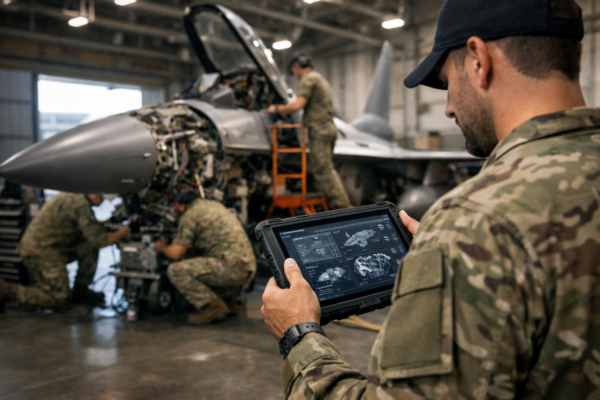
IETM vs. Traditional Manuals
In today’s digital era, industries are rapidly moving away from paper-based documentation toward smart, interactive solutions. Technical documentation plays a crucial role in sectors like defense, aerospace, manufacturing, railways, and heavy engineering. Traditionally, organizations relied on printed manuals or static digital files. However, with growing system complexity, these methods are no longer efficient. This is where IETM (Interactive Electronic Technical Manual) comes into the picture.
This blog explains the key differences between IETM vs. Traditional Manuals, their advantages, limitations, and why modern organizations are adopting IETM solutions like NavIETM®
for better efficiency and compliance.
What Are Traditional Manuals?
Traditional manuals are printed books or static digital documents such as PDFs, Word files, or scanned copies. These manuals contain technical instructions, maintenance procedures, parts information, and troubleshooting guides.
Key Characteristics of Traditional Manuals
- Paper-based or static digital format
- Linear content structure
- Manual searching through pages
- Difficult to update and maintain
- High printing and distribution costs
Traditional manuals were suitable when systems were simple and documentation requirements were limited. However, as equipment and regulations became more complex, their limitations became more visible.
What Is IETM?
IETM stands for Interactive Electronic Technical Manual. It is a digital, structured, and interactive documentation system designed to deliver technical information efficiently. An IETM allows users to quickly search, navigate, and interact with technical content using hyperlinks, multimedia, and intelligent filters.
Modern IETM solutions, such as those offered by NavIETM®, are often compliant with standards like S1000D, making them suitable for defense and aerospace industries.
IETM vs. Traditional Manuals: Core Differences
- Content Structure and Accessibility
Traditional manuals follow a linear structure. Users must flip pages or scroll through long documents to find information. This consumes time and increases the risk of errors.
In contrast, IETM uses modular content called data modules. Users can instantly access relevant information using search, hyperlinks, and logical navigation. This makes IETM far more efficient for technicians and engineers.
Winner: IETM
- Search and Navigation
Searching in traditional manuals is slow and often unreliable, especially in printed formats. Even in PDFs, search results may be inaccurate.
An IETM provides advanced search functions, filters, and cross-references. Users can quickly locate procedures, parts, or fault isolation steps within seconds.
Winner: IETM
- Updates and Maintenance
Updating traditional manuals requires reprinting or redistributing revised files. This process is expensive, slow, and prone to version control issues.
With IETM, updates are quick and centralized. Changes are reflected instantly across the system, ensuring users always access the latest and approved data. Platforms like NavIETM®simplify version management and content updates.
Winner: IETM
- Cost Efficiency
Traditional manuals incur high costs related to printing, storage, logistics, and reprinting during updates.
Although IETM requires an initial investment, it significantly reduces long-term costs by eliminating printing, reducing downtime, and improving operational efficiency.
Winner: IETM (Long-Term)
- User Experience and Productivity
Traditional manuals can be overwhelming due to bulky volumes and complex layouts. This impacts technician productivity and increases training time.
An IETM enhances user experience with interactive features such as:
- Step-by-step guided procedures
- Visual illustrations and animations
- Easy fault diagnosis workflows
- This results in faster task completion and fewer mistakes.
Winner: IETM
- Compliance and Standards
Traditional manuals often struggle to meet modern documentation standards and regulatory requirements consistently.
IETM systems are designed to comply with international standards such as S1000D, ensuring structured content, traceability, and audit readiness. Solutions from NavIETM®are built with compliance in mind.
Winner: IETM
When Are Traditional Manuals Still Used?
Despite their limitations, traditional manuals may still be used in:
- Small-scale operations
- Legacy systems
- Low-budget projects
- Environments with no digital access
However, even in these cases, organizations are gradually transitioning to IETM for future scalability.
Why Industries Are Shifting to IETM
The shift from traditional manuals to IETM is driven by multiple factors:
Increasing system complexity
Demand for faster maintenance and repairs
Need for real-time updates
Digital transformation initiatives
Compliance with global standards
An IETM is no longer a luxury; it has become a necessity for industries aiming to remain competitive.
IETM and Digital Transformation
Digital transformation is reshaping how organizations operate. IETM plays a key role by:
Integrating with maintenance systems
Supporting mobile and tablet access
Enabling data-driven decision-making
Reducing equipment downtime
By adopting modern IETM platforms likeNavIETM®, organizations can future-proof their technical documentation.
IETM vs. Traditional Manuals: Comparison Table
| Feature | Traditional Manuals | IETM |
| Format | Paper / Static PDF | Interactive Digital |
| Search | Manual / Limited | Advanced & Fast |
| Updates | Costly & Slow | Instant |
| User Experience | Basic | Highly Interactive |
| Compliance | Limited | Standards Compliant |
| Long-Term Cost | High | Lower |
| Scalability | Poor | Excellent |
Why Choose NavIETM?
When selecting an IETM solution, choosing the right platform is critical. NavIETM® offers:
- User-friendly interface
- S1000D-compliant architecture
- Efficient content management
- Secure and scalable solutions
- Industry-focused customization
NavIETM® helps organizations move smoothly from traditional manuals to modern IETM systems without disruption.
Final Thoughts
The comparison between IETM vs. Traditional Manuals clearly shows that traditional documentation methods are no longer sufficient for modern technical environments. While traditional manuals served their purpose in the past, they fail to meet today’s demands for speed, accuracy, and compliance.
An IETM offers a smarter, faster, and more reliable way to manage technical documentation. With platforms like NavIETM®, organizations can improve productivity, reduce costs, and ensure compliance with global standards.
If your organization is still relying on traditional manuals, now is the right time to consider upgrading to an IETM solution and embrace the future of technical documentation.